 Buy/Sell
 Log in


Kinah Spending Priority - AION 2 Guide
Kina disappears fast in AION 2. Learn which upgrades are worth paying for and where your wallet is better left untouched.Kinah Spending Priority
AION 2
Last Update: October 6, 2026
Introduction
Before we begin, a quick terminology note: while the global version officially calls the game's currency Kina, long-time players will recognize it as Kinah, the name used in AION and the Asian versions of the game. Since most of the community still refers to it as Kinah, both terms will be used throughout this guide.
The good news is that Kinah efficiency is surprisingly logical once you stop treating every upgrade as equally valuable. Cheap enhancement levels give enormous value. Permanent slots such as the Belt and Amulet deserve early attention. Odyle Energy can turn a small Kinah payment into another lucrative dungeon claim. Deep +11 to +15 enhancement, on the other hand, can devour millions for a handful of Item Levels.
This guide is built around one question: if you have a limited amount of Kinah right now, where should it go first? We will look at the best progression purchases, the expensive traps, and the situations where spending a little today actually earns you more tomorrow.
First Rule: Bound Kina Is Your Progression Money
AION 2 keeps Bound Kina and regular, tradeable Kina in separate wallets. The distinction becomes especially important when you start shopping on the Market.
Most personal progression costs use a combined Kinah pool. When they do, Bound Kina is spent first automatically. Regular Kina survives until the bound balance is exhausted. The Market is different: purchases there require regular Kinah.
Bound Kina
Best used naturally on enhancement, NPC purchases, Commands, Duty rerolls, Substance Morph recipes, and other eligible character-progression costs.Regular Kina
Your trading capital. Keep it available for Market purchases and other situations where Bound Kina cannot cover the bill.You do not need to manually protect your Bound Kina. The game already spends it first on combined costs. What you should protect is your regular Kina, because every unnecessary progression expense paid after your bound balance runs dry is eating into your Market budget.
What Should You Spend Kinah on First?
| Priority | Spend | Why |
|---|---|---|
| Very High | Cheap Enhancement to reach the next Item Level gate | The first enhancement levels give far more Item Level per Kinah than deep enhancement. |
| Very High | Belt and Amulet progression | These are long-term story items that are upgraded instead of replaced by normal drops. |
| High | Odyle Energy Substance Morph | 50,000 Kinah can help fund another dungeon reward claim when you already have the required Odyle materials. |
| High | Useful Commands | They convert Kinah into repeatable weekly rewards and progression materials. |
| High / Situational | Targeted Market purchases | Excellent when one item or material unlocks the next progression step; wasteful when buying temporary upgrades. |
| Situational | Gear Change Voucher conversions | Expensive, but they can eliminate dungeon RNG and guarantee the exact slot you need. |
| Low Early / High Late | +11 to +15 Enhancement and Amplified Enhancement | Powerful, but dramatically more expensive than safe enhancement. |
| Low | Deep storage expansion, aggressive Duty rerolls, temporary gear optimization | Comfort or short-term gains can consume millions without opening meaningful content. |
While Leveling: Keep Your Wallet Mostly Closed
Levels 1 to 45 are not the moment to lavish Kinah on gear. Quest rewards, field drops, Sealed Dungeons, and early Expeditions replace equipment too quickly. A handsome leveling weapon can become vendor fodder several hours later.
Cheap consumables are fine. A small enhancement that immediately solves a progression problem is also fine. What you want to avoid is turning temporary equipment into a vanity project.
• basic potions, Return Scrolls, and inexpensive convenience items
• very cheap enhancement when it helps you clear current content
• early storage lines if your Cube or Storage is genuinely getting in the way
Usually poor leveling expenses:
• buying expensive equipment from other players
• heavily enhancing gear you will replace before level 45
• purchasing premium materials for a temporary item
• rerolling secondary systems repeatedly for marginal gains
Priority #1: Buy the Cheap Item Levels First
Once you reach level 45, Item Level becomes the gatekeeper. The Abyss, stronger Expeditions, Transcendence tiers, and the Ludra raid all sit behind Item Level requirements. This makes early enhancement unusually valuable: sometimes the best upgrade is simply the cheapest one that pushes the total number high enough.
Global enhancement is forgiving at the start. Rare gear caps at +5, Epic at +10, and Unique gear can reach +15. Every enhancement step up to +10 succeeds automatically. Failure only enters the picture when Unique gear goes beyond +10.
| Example Upgrade | Approx. Kinah Cost | Value |
|---|---|---|
| Epic Item Level 38: +0 → +5 | 69,850 | Excellent early Item Level per Kinah |
| Unique Item Level 54: +0 → +5 | 99,150 | Very efficient progression |
| Epic Item Level 38: +5 → +10 | 274,000 | Still reasonable when it unlocks content |
| Unique Item Level 86: +0 → +10 | 775,100 | Strong investment on gear with a longer lifespan |
| Unique Item Level 86: +10 → +15 | About 11.9M on average | Late-game luxury compared with the early levels |
That last row is the crucial one. On the same piece, the path from +10 to +15 can cost roughly 75 times more Kinah per Item Level than the cheapest +0 to +5 stretch. Across a full +0 to +15 climb, around 94% of the expected Kinah cost sits in the final five levels.
If you are stuck just below an important Item Level gate, spread cheap enhancement across several underdeveloped pieces before forcing one expensive item toward +15. It is rarely glamorous, but it is brutally efficient.
Priority #2: Your Belt and Amulet Are Long-Term Investments
Most equipment is eventually replaced by a stronger drop. The Noble Belt and Revelation Amulet work differently. You receive them through progression and continue upgrading them through enhancement and Substance Morph into higher quality tiers.
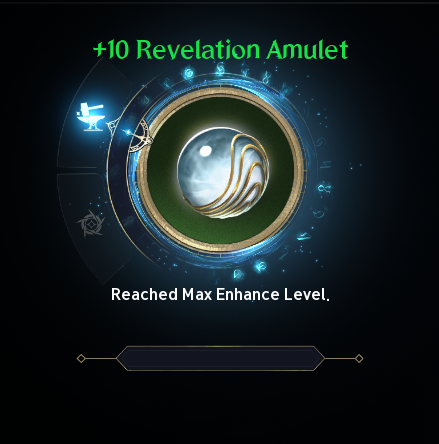
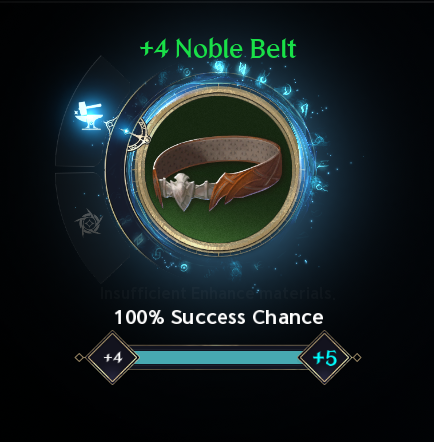
That makes their early enhancement unusually safe. You are putting resources into a slot that remains part of your character's progression instead of polishing an item that may disappear tomorrow.
| Tier | Kinah to +10 | Recommendation |
|---|---|---|
| Rare | 232,000 | Very high priority. Excellent Item Level and stat gain for the price. |
| Epic | 1,579,000 | High priority once the rest of your cheap upgrades are covered. |
| Unique | 5,026,000 | Later investment. Strong, but no longer cheap enough to ignore alternatives. |
Every level also requires the appropriate Enhance Scroll. Amulet scrolls come from Monolith Resonance, while Belt scrolls are tied to Stronghold progression. Once a tier reaches +10, Substance Morph advances the item to the next quality and resets its enhancement back to +0.
Priority #3: Spend Kinah to Create More Odyle Energy
One of AION 2's smartest economic loops is easy to overlook. Substance Morph can turn gathered Odyle materials plus 50,000 Kinah into 40 Odyle Energy. Odyle Energy is then spent to claim reward Cubes from Expeditions, Transcendence, and other supported content.

At level 45, that can be an excellent trade. A Conquest claim currently pays hundreds of thousands of regular Kinah before you even count gear or crafting materials. Transcendence claims can pay still more. Spending 50,000 combined Kinah to unlock another profitable claim can therefore be much more useful than squeezing one extra enhancement level onto disposable gear.
• 25 Odyle
• 5 Fine Odyle
• 1 Pure Odyle
• 50,000 Kinah
There is an opportunity cost: those Odyle materials themselves have value. If you have Market access, compare what the materials could sell for against the value of another Cube claim. Still, for a character comfortably clearing profitable Conquest or Transcendence content, this conversion is one of the more elegant ways to make Kinah work for you.
This is one of the rare expenses that can directly create another income opportunity. If your Odyle Energy is the bottleneck and your next claim is valuable, 50,000 Kinah is often money with a job to do.
Commands Are a Weekly Kinah Investment
Commands are repeatable quest scrolls bought from Command Merchants. The basic versions cost only 15,000 Kinah, while stronger Lower Abyss versions climb through 37,500, 75,000, and as high as 150,000 Kinah.
They do not exist to hand your Kinah back as a neat cash refund. Their value is in the progression rewards: Abyss-related resources, materials, tickets, and additional reward rolls. The cheap Commands are easy to justify; the premium versions deserve a glance at your current needs before you empty the shelf.
At 15,000 Kinah, these are an easy weekly purchase for active players. The entry cost is small enough that the progression rewards usually matter more than the fee.
At 75,000–150,000 Kinah each, they are no longer pocket change. Buy them because you value their reward pool, not simply because the merchant has stock.
Duty Rerolls: Cheap at First, Absurd If You Keep Clicking
Duty Missions are profitable. Duty rerolls can become the opposite.
Refreshing the reward options begins innocently enough, then accelerates through 1,000 → 2,500 → 6,000 → 14,000 → 35,000 → 85,000 → 200,000 Kinah. That curve turns impatience into a surprisingly expensive hobby.
A small reroll is reasonable when the current rewards are poor or you are hunting a particularly valuable ticket or Hidden Cube Key. Once the reroll itself begins approaching the value of the Mission reward, the arithmetic has already made the decision for you.
The Market: Buy Bottlenecks
The Market is where regular Kinah becomes truly flexible. You can turn currency into gear, materials, consumables, and crafting components without waiting for the exact drop or gathering node you need. That convenience is powerful, which is precisely why it is easy to abuse.
The best Market purchase solves a bottleneck. Perhaps one crafted component finishes your weapon. Perhaps a modest gear upgrade pushes you over 1,400 Item Level and opens the next dungeon tier. Perhaps buying the missing material is cheaper than gambling through several crafting attempts.
- A piece that immediately unlocks a major Item Level threshold
- The last materials needed for a long-term crafted weapon or accessory
- A fairly priced upgrade for a slot that has refused to drop
- Consumables you genuinely burn through in difficult content
- Small leveling upgrades you will replace shortly
- Expensive Manastones for temporary gear
- Materials bought without checking the full crafting success path
- An item purchased simply because it is the highest grade you can afford
Buying from the Global Market requires an active Special Quai Membership. Direct player-to-player trading is disabled at Global launch, making the Market the practical route for targeted player purchases.
Crafting: The Craft Button Is Free, the Materials Are Not
A common misconception is that crafting itself consumes Kinah. In the Global client, standard crafting recipes have no direct Kinah crafting fee. The real expense appears when you start purchasing the required materials from other players.
That distinction matters because high-end crafting has layers of probability. Many recipes have success rates below 100%, and crafted gear commonly relies on a 25% Great Success to produce the Splendent piece required for the next step in the chain.
If you buy every input at Market prices, one unlucky crafting session can become an exquisite little bonfire for your wallet. Sometimes purchasing the completed item is cheaper. Sometimes farming half the materials yourself and buying only the bottleneck is best. There is no universal answer because Market prices change constantly.
When crafting gear, price the whole process, not just the next recipe. If the next tier requires a Splendent result, the expected material cost matters far more than the ingredients shown for a single attempt.
Gear Change Vouchers: Expensive Bad-Luck Insurance
Dungeon RNG eventually creates an awkward situation: you have the vouchers, you have most of the gear, and the one slot you need simply refuses to appear. AION 2 lets you solve several of these problems through Substance Morph selection chests and guaranteed conversions.
These are not cheap purchases, but they are precise. You are paying to stop gambling with your dungeon time.
| Conversion | Kinah Cost | When It Makes Sense |
|---|---|---|
| Draupnir / Vakron / Ferocious Horn Armor Selection Chest | 500,000 | When the chosen armor slot completes an important upgrade or Item Level gate |
| Krao Cave Weapon Selection Chest | 1,000,000 | When you already have the required weapon/voucher pieces and need the correct class weapon |
| Urugugu Canyon Weapon Selection Chest | 1,500,000 | Mid-progression weapon correction |
| Fire Temple Weapon Selection Chest | 2,000,000 | Strong late-midgame weapon correction |
| Bakarma / Vakron / Nuakum Guard conversions | 1M / 1.5M / 2M | Useful when the Guard is your clear missing slot and vouchers are ready |
| Abyssal Bracelet | 5,000,000 | Late-game targeted progression using Ludra Gear Vouchers |
| Abyssal Forge Weapon Selection Chest | 10,000,000 | Endgame correction when Ludra gave you the wrong weapon and the required vouchers are available |
+11 to +15: Where Kinah Starts Disappearing in Great Heaps
The first ten enhancement levels are straightforward. The final five are where the economy bares its teeth.
At +11, success drops below 100%. Each failure costs the Kinah and Enhance Stones used for that attempt, although your item and its current enhancement level remain safe. A pity mechanic adds success chance after each failure.
The expected Kinah bill rises rapidly with item level. A level-54 Unique piece averages roughly 7.5 million Kinah for the +10 to +15 stretch. Item level 86 rises to around 11.9 million, while item level 102 reaches roughly 14.1 million.
Deep enhancement should follow permanence. The longer you expect to keep the weapon or armor, the easier it is to justify those millions. Pushing a transitional dungeon piece to +15 because you happened to have the cash is usually a very expensive detour.
Amplified Enhancement sits beyond this point and can consume even larger amounts. Treat it as genuine endgame spending after your basic gear path, major Item Level gates, and long-term pieces are already in good shape.
Transfer and Extraction Can Save You From Paying Twice
One of the best Kinah-saving habits is learning what happens when an upgraded item is replaced.
Extracting enhanced equipment returns the Enhance Stones invested into it, but the Kinah is gone. This is why temporary enhancement is not completely free even when the stones come back later.
Unique gear also has a Transfer system. Enhancement, Amplified Enhancement, and transferable stat lines can move onto an eligible new Unique piece. The transfer itself costs Transfer Stones rather than Kinah and succeeds at 100%.
Transfer does not keep: Manastones/Soulstones, Theostone, Potential, and the Soul Fuse line
Runes Can Turn Kinah Into Smoke
Runes deserve a warning of their own because they do not follow normal enhancement safety. From +2 onward, a failed Rune enhancement can destroy the Rune. There is no ordinary pity protection saving the attempt.


That makes aggressive Rune enhancement one of the more volatile uses of progression resources. Do not risk a Rune you cannot replace, and do not let a lucky early streak convince you that the next click is suddenly harmless.
Storage: Buy Convenience Until It Stops Being Cheap
Inventory space is one of the few Kinah expenses that does absolutely nothing to your combat stats and can still feel wonderful.
The early Character and Server Storage expansions are inexpensive. Lines 6–10 together cost only 8,000 Kinah, and reaching line 15 brings the running total to just 47,000. After that, prices begin climbing aggressively. Reaching line 25 costs more than one million in total, and the deepest expansions become extravagantly expensive.
Your Cube has its own Kinah expansions as well, with all ten costing around 2.7 million Kinah combined.
Turning Kinah Into Quna Is Usually a Later Decision
Regular Kinah can also leave the progression economy entirely. Through Substance Morph, players can package tradeable Kinah into Kina Chests and sell those Chests for Quna on the official Exchange.
The conversion has a built-in cost. A 400,000-Kinah Chest requires 440,000 Kinah to create, while the larger versions follow the same roughly 10% premium. Exchange rates themselves are set by players and change over time.
For a fresh level-45 character, this is rarely where the first spare million should go. Kinah is still busy opening Item Level gates, enhancing permanent gear, and paying for targeted progression. Later, once the character is established, exchanging surplus Kinah for Quna becomes a much more interesting option.
How We Advise to Spend Different Kinah Budgets
- Cheap +5 enhancements that open the next content gate
- Rare Belt and Amulet progression
- Basic Commands
- Odyle Energy Morph when you can immediately use the claim profitably
Avoid: expensive Market gear, deep rerolls, and +11 attempts.
- Fill remaining cheap enhancement gaps
- Start Epic Belt/Amulet investment
- Use targeted 500k voucher conversions when they unlock an important slot
- Buy a Market bottleneck only if it meaningfully accelerates progression
Avoid: spreading the entire budget across tiny cosmetic upgrades to temporary gear.
- Long-term Unique gear to +10
- Crafted weapon/accessory material bottlenecks
- Higher-tier voucher conversions
- Finish Epic Belt/Amulet tiers if they are lagging behind
Ask first: does this purchase open 1,400, 1,600, 1,900, 2,100, 2,500, or 2,800 Item Level content?
- Unique Belt/Amulet enhancement
- Late crafted gear progression
- Specific endgame selection conversions
- Carefully chosen +11 to +15 enhancement
- Eventually Amplified Enhancement
At this point: permanence and expected lifespan matter more than simply buying the largest number on the screen.
A Simple Kinah Spending Checklist
2 Is there a cheaper +5 or +10 enhancement somewhere else on my gear?
3 Can Bound Kinah pay this cost before I touch regular Kinah?
4 Will I keep this item long enough to justify the investment?
5 Can the enhancement or stat lines transfer to my next piece?
6 Would 50,000 Kinah spent on Odyle Energy create a more valuable dungeon claim?
7 Is the Market purchase cheaper than farming, crafting, or using a voucher conversion?
8 Am I paying for actual progress, or merely because I am impatient?
Final Thoughts
AION 2 rewards players who spend Kinah with a little restraint. Early progression is full of bargains: cheap enhancement, the permanent Belt and Amulet, inexpensive Commands, and the chance to turn 50,000 Kinah into more Odyle Energy. These purchases move the character forward without mutilating the wallet.
The expensive decisions arrive later. Deep enhancement, crafted endgame gear, voucher conversions, Unique special slots, and Market purchases can swallow millions in a handful of clicks. They are not bad expenses; they simply need a clear purpose.
The best question to ask before any large purchase is therefore not "Is this item stronger?" It is "What does this Kinah unlock?" If the answer is a new dungeon tier, a permanent equipment upgrade, or another profitable reward claim, the money is probably working. If the answer is merely a slightly prettier number on gear you will replace tomorrow, keep the wallet shut.
AION and AION 2 are trademarks and intellectual property of NC Corporation.