 Buy/Sell
 Log in

OSRS Gold Farming
Make the most of your time in OSRS with practical Gold farming routes, low-effort activities, and endgame money makers.OSRS Gold Farming Guide - Old School RuneScape
Last Update: October 16, 2026
Introduction
There are dozens of ways to earn Gold in Old School RuneScape, from processing inexpensive materials to farming bosses for valuable drops. The best choice depends on your account's levels, available Gold, quest progress, and how much attention you want to give the activity.
New players can start with jewellery enchanting, Ultracompost, and basic Grand Exchange trading. Members with access to Farming and Fossil Island can earn money through short Herb and Birdhouse Runs between other activities. Higher-level accounts have profitable options in Thieving, Runecrafting, Mining, and PvM, with raids and difficult bosses offering the largest potential rewards.
The methods below include practical requirements and strategies so you can find something useful at your current stage of progression. Always check Grand Exchange margins before buying materials in bulk: item prices, supply costs, and the 2% sales tax can change the profitability of a method quickly.
Building a cash stack is easier when you combine a reliable main method with short, repeatable activities.
Gold Farming Methods with Low Requirements
These methods are accessible with modest skill levels or an inexpensive setup. Most are suitable for players who want to improve their equipment or fund early quests without investing in high-end combat gear.
1. Grand Exchange Flipping
Requirements: Starting Gold; Membership is helpful for more active offer slots. Best for: Profit during other activities.
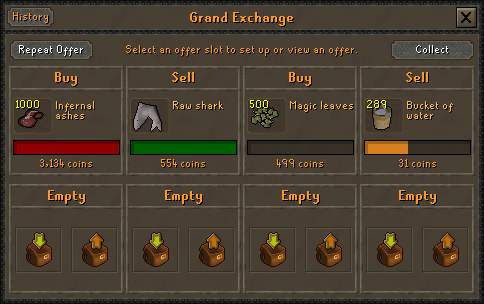
Flipping means placing buy orders near the lower end of an item's trading spread and reselling at a higher price. Runes, ammunition, food, and potions are convenient starting points because they trade frequently. Expensive equipment can offer larger margins per item, but sales may take much longer.
Check recent completed prices, trading volume, and four-hour buy limits before placing orders. Work with a few familiar items first and calculate your margin after the Grand Exchange sales tax. A wide spread is not useful if you cannot buy or resell the item at the prices you expect.
For a detailed explanation of margins, investing, and price charts, see our Grand Exchange Moneymaking Guide.
 2. Enchanting Sapphire Rings and Emerald Necklaces
Requirements: 7 Magic for Sapphire Rings; 27 Magic for Emerald Necklaces; Cosmic Runes and the appropriate elemental runes or staff. Best for: Early Gold and Magic XP.
With Lvl-1 Enchant, Sapphire Rings become Rings of Recoil. At 27 Magic, Lvl-2 Enchant turns Emerald Necklaces into Binding Necklaces. Both finished items have uses in combat or skilling, giving them a market beyond players simply levelling Crafting.
Before buying a large stack, compare the value of the finished jewellery with the cost of the unenchanted item, Cosmic Runes, and any elemental runes. Enchant near a bank and sell a test batch first. The margin can vary enough that an otherwise useful training method occasionally loses Gold.

3. Making Ultracompost
Requirements: Supercompost and Volcanic Ash; optional 22 Mining and Fossil Island access to gather Ash. Best for: Simple, bank-based processing.
Combine one Supercompost with two Volcanic Ash to create one Ultracompost. You can buy both ingredients on the Grand Exchange and process them at a bank, or mine the Ash yourself on Fossil Island after unlocking the region.
Use the make-all option for inventories and check whether the finished product sells for more than the combined input cost and tax. If you mine your own Ash, remember that it still has a market value: consider the time spent gathering it when comparing this method with alternatives.
 4. Tanning Dragonhides
Requirements: A supply of Dragonhides, tanning fees, and enough Gold for materials; Members only. Best for: Low-skill processing with a larger cash stack.
Buy Green, Blue, Red, or Black Dragonhides and take them to Ellis in Al Kharid to turn them into Dragon Leather. The leather is used for Crafting training, and you can sell it on the Grand Exchange after each batch.
Compare hide and leather prices individually, because the most expensive hide is not necessarily the most profitable to tan. Include the NPC tanning cost, energy supplies, and sales tax. Weight-reducing gear and quick trips between the bank and tanner help improve output.

5. Herb Runs
Requirements: 32 Farming for Ranarr or 38 for Toadflax; seeds, Ultracompost, and access to herb patches. Best for: Profit in short sessions throughout the day.
Herb Runs are among the most convenient ways to build a steady cash stack without spending hours on one activity. Plant herbs in several patches, let them grow while you quest or train, then harvest and sell the crop. Toadflax, Ranarr, and Snapdragon are useful candidates, depending on current seed and herb prices.
Use Ultracompost, Magic Secateurs, and useful teleport unlocks to increase the value of each run. Herbs take roughly 90 minutes to grow, but your active time is only the planting and harvesting trip. Profit-per-hour calculations that count only those few active minutes should not be confused with money earned continuously for an entire hour.
 6. Birdhouse Runs
Requirements: Bone Voyage and access to Fossil Island; Hunter and Crafting levels appropriate to your birdhouses. Best for: Short recurring trips and passive Hunter experience.
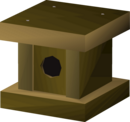
There are four Birdhouse locations on Fossil Island. Build and fill the traps with suitable seeds, then return after approximately 50 minutes to collect loot and replace them. Bird Nests provide most of the sellable value, and higher-tier Birdhouses add useful Hunter experience.
Birdhouse Runs work particularly well alongside Herb Runs. The profit of one trip is modest compared with strong bossing methods, but the total adds up over time and requires very little active gameplay.
Gold Farming Methods with Higher Requirements
These activities benefit from stronger skills, quest unlocks, or good equipment. Some produce steady materials; others depend on rare drops and can have long stretches with modest returns.
 7. Humidifying Clay
Requirements: 68 Magic, Dream Mentor, Lunar Spellbook, Clay, Astral Runes, and preferably a Steam Battlestaff. Best for: Fast processing while gaining Magic XP.
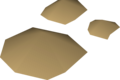
The Humidify spell turns an inventory of ordinary Clay into Soft Clay with one cast. Equip a Steam Battlestaff to cover elemental rune costs, keep Astral Runes in your inventory, and repeat the cast next to a bank.
The method rewards a quick banking rhythm, although maintaining maximum speed for a full hour takes practice. Check the margin between Clay and Soft Clay before you buy materials. This is a useful alternative when you want some Magic experience along with your Gold.

8. Pickpocketing Master Farmers
Requirements: 38 Thieving; 50 Thieving and Agility for the Rogue outfit; high Thieving and Farming recommended. Best for: Seeds, consistent training, and long sessions.
Master Farmers carry Farming Seeds that can be sold on the Grand Exchange. The full Rogue outfit doubles most pickpocket loot, and Ardougne Diary bonuses improve your success chance. High Thieving makes the method much more comfortable; with the Hard Ardougne Diary, Level 94 Thieving provides guaranteed success against Master Farmers.
Farming level also matters. The chance of obtaining valuable seeds improves as your Farming level rises, reaching its strongest tier at 85 Farming. For a player with low Farming, Master Farmers may be less profitable than their Thieving level alone suggests.
Our OSRS Thieving Guide covers equipment and other profitable pickpocketing targets, including Vyres and Elves.

9. Mining Runite Ore
Requirements: 85 Mining; fast travel options and an upgraded Pickaxe recommended. Best for: Players who prefer resource gathering.
Runite Ore is still valuable, but its profitability depends heavily on how quickly you can find available rocks. Competition, respawn times, banking, and world switching all reduce the number of ores mined per hour.
Choose a convenient mining location, avoid spending too long waiting at an empty rock, and compare the method with other uses of your Mining level. Wilderness spots add PvP risk and are best approached with inexpensive equipment. For other Mining routes, see our OSRS Mining Guide.

10. Crafting Death and Other Valuable Runes
Requirements: 65 Runecraft and Mourning's End Part II for Death Runes; Enter the Abyss for Abyss runs; Essence Pouches and transportation recommended. Best for: Higher-level Runecraft accounts.
Rune production becomes much more efficient with large Essence Pouches and a reliable banking route. Death Runes are a familiar option from Level 65, with a second Rune per Essence unlocked at 99 Runecraft. Nature and Law Runes have lower entry requirements and can also be worthwhile when the market favors them.
At higher levels, compare traditional Abyss routes with Blood, Soul, Wrath, and Aether Runecrafting wherever your account has the appropriate unlocks. A more profitable rune on paper may still be worse in practice if its route is slower or the required supplies are expensive. The OSRS Runecrafting Guide covers the progression and major unlocks.
 11. Bossing - From Perilous Moons to the Corrupted Gauntlet
Requirements: Depend on the boss; suitable Combat stats, quest unlocks, and gear. Best for: Combining account progression with valuable drops.
Perilous Moons is a practical entry point for mid-level players. It provides supplies within the activity and offers valuable armour-set rewards. Vorkath, unlocked through Dragon Slayer II, is a strong next step for accounts that can maintain regular kills without using too many supplies.
Once you complete Song of the Elves, the Corrupted Gauntlet becomes another excellent goal. You prepare equipment inside the encounter, so normal gear and supply costs are minimal. Most of its biggest potential profit comes from rare Crystal rewards, making your short-session income less predictable than the average profit calculations suggest.
12. Raids and the Doom of Mokhaiotl
Requirements: High-level Combat, strong gear, and encounter knowledge; raid or boss unlocks vary. Best for: Experienced PvM players chasing high-value unique drops.
Old School RuneScape has three major raids: Chambers of Xeric, Theatre of Blood, and Tombs of Amascut. Their regular rewards help offset supplies, but the largest payouts come from rare items. Tombs of Amascut offers adjustable difficulty, while Theatre of Blood is particularly demanding and benefits from an experienced team.
The Doom of Mokhaiotl, accessed after The Final Dawn, is another major high-end moneymaker. Each successful delve allows you to claim your rewards or continue deeper for a better chance at valuable uniques, taking on more difficulty and risk. Deep-delving profit figures assume strong gear and fast, consistent execution; they are not realistic starting earnings for a player learning the fight.
If you prefer a steadier income, mix difficult PvM with familiar bosses or Skilling rather than relying entirely on a rare drop to pay for your next upgrade.
Recommended Gold Making Progression
Final Thoughts
There is no single best Gold Farming method for every OSRS account. Enchanting, Ultracompost, and tanning are easy to try with low requirements, while Herb and Birdhouse Runs add a little income throughout normal gameplay. High-level skills and quest unlocks open more options, especially through Thieving, Runecrafting, and bossing.
Focus on methods you can repeat comfortably, keep an eye on the cost of supplies and Grand Exchange taxes, and spend your earnings on unlocks that improve your account. Long-term progression usually makes a greater difference than chasing a temporary price spike.
Old School RuneScape and RuneScape are trademarks and intellectual property of Jagex Ltd.